The Art Of Kokedama:
History, Meaning & Natural Beauty
Welcome to MERCCShop.com
What is Kokedama?
Kokedama (苔玉), which literally translates to “moss ball”, is a traditional Japanese planting technique where a plant’s roots are encased in a ball of soil and wrapped in living moss.
Unlike conventional potted plants, kokedama removes the container entirely—allowing nature itself to become the vessel. The result is a living sculpture that can be displayed on a surface or suspended in the air.
👉 Learn more:
A Brief History of Kokedama
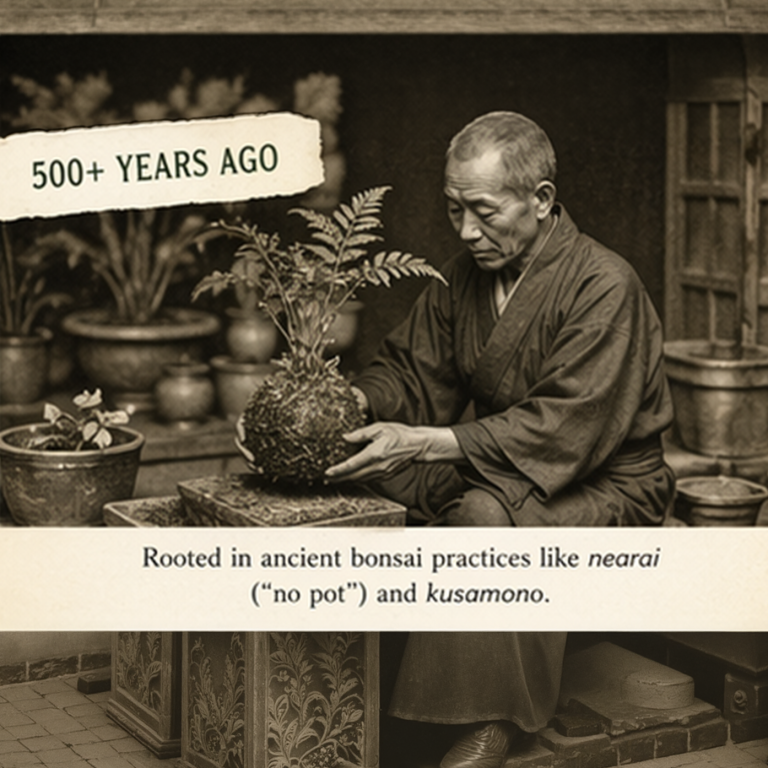
Kokedama has roots in centuries-old Japanese gardening traditions and is closely tied to the evolution of bonsai.
- Originates from the Nearai bonsai method, where plants were grown tightly so their roots held soil together when removed from a pot
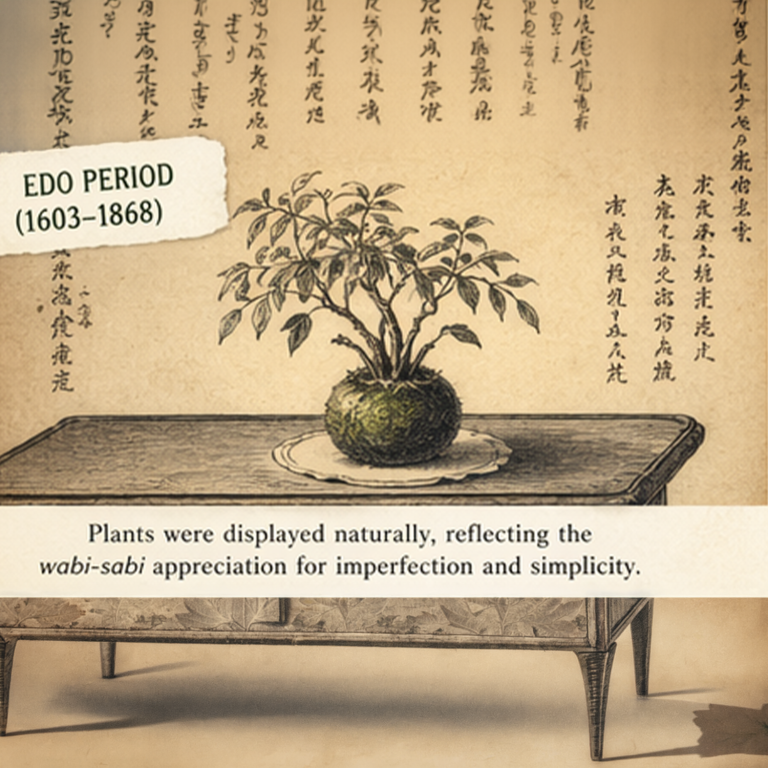
- Developed further during Japan’s Edo period (1603–1868) as an adaptation of bonsai aesthetics
- Became more widely popular in modern form in the late 20th century as a simplified, accessible plant art
Kokedama is sometimes called “poor man’s bonsai”, not because it lacks beauty—but because it removes the need for expensive containers while preserving artistic intention.
👉 Explore deeper history:
Cultural Meaning & Philosophy
Kokedama is more than a planting technique—it reflects core Japanese aesthetic values.
🌱 Wabi-Sabi: Beauty in Imperfection
Kokedama embodies wabi-sabi, the philosophy of appreciating impermanence, simplicity, and natural irregularity.
- Imperfect shapes
- Organic textures
- Natural aging over time
🌿 Connection to Nature
By eliminating the pot, kokedama highlights the raw relationship between plant, soil, and environment—a minimalist expression of nature indoors.
🧘 Mindfulness & Care
Like bonsai, kokedama encourages patience and attentiveness. The act of caring for it—watering, observing, maintaining—becomes a quiet, meditative practice.
How Kokedama is Made
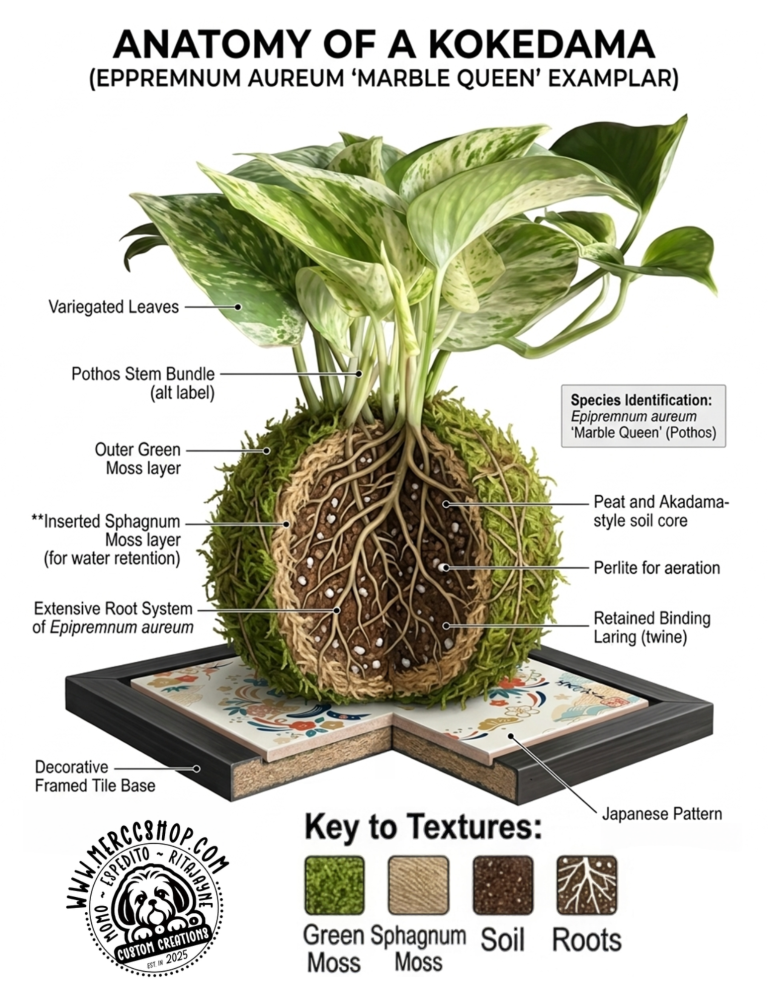
A traditional kokedama consists of:
- A mixture of soil (often peat, akadama, or clay-based soil)
- Plant roots shaped into a compact ball
- Moss wrapped around the soil
- String or wire to hold the structure together
The finished piece can be displayed on a dish or suspended as a floating garden element.
👉 Step-by-step guide:
Why Kokedama is Popular Today
Modern interest in kokedama has surged due to:
- 🌿 Minimalist design trends
- 🏡 Indoor plant styling & biophilic design
- 🌍 Eco-conscious gardening (no plastic pots)
- 🎨 Art-meets-nature aesthetics
It blends seamlessly into both traditional Japanese spaces and modern interiors.
Final Thoughts
Kokedama represents a beautiful intersection of art, nature, and philosophy. Rooted in centuries-old traditions yet adaptable to modern living, it invites us to slow down and reconnect with the natural world—one moss ball at a time.
🔗 Further Reading & Resources